


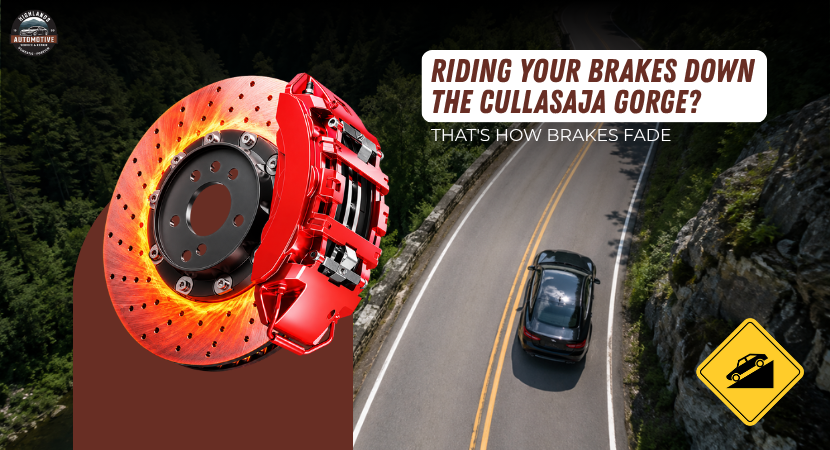
You are rolling down US-64 through the Cullasaja Gorge, brake lights ahead, and after a mile of steady pedal the brakes go soft and smell hot. Push harder, and it sinks. That is brake fade, and on a mountain road it is genuinely dangerous.
Highlands sits above 4,000 feet, and every drive down to Franklin or over to Cashiers is a long descent that heats brakes far more than flat-land driving ever does. In summer, with a loaded car or a trailer, tired pads and old fluid give up right when you need them most. So get your brakes checked before the next trip down the mountain.
Quick Summary: Key Takeaways
- Know the feeling: A soft, sinking pedal and a hot smell on a long descent mean your brakes are fading.
- Heat is the enemy: Riding the brakes downhill boils the fluid and glazes the pads.
- Old fluid fails first: Brake fluid absorbs water over time, dropping its boiling point and fading sooner.
- Engine-brake the grades: Downshifting on US-64 and NC-106 saves your brakes from cooking.
- We service the whole system: Pads, rotors, and a fluid flush restore a pedal you can trust on the gorge.
What Brake Fade Feels Like on a Long Descent
Brake fade shows up as a pedal that goes soft and long. Early on, the brakes still work, but you press farther for the same slowing, and if you keep riding them downhill the pedal sinks toward the floor, the car stops shedding speed, and you catch a sharp, hot smell that means overheated pads and boiling fluid. That is real.
On flat ground you might never feel it. Drop 2,000 feet down the Cullasaja and a weak system reveals itself fast.
Why Mountain Grades Boil Brake Fluid
Brakes turn motion into heat, and a long descent makes heat faster than the brakes can shed it. Ride them for a mile down a grade and caliper temperatures climb into the hundreds of degrees, heating the fluid inside until it boils. Fresh DOT 4 fluid boils around 446 degrees Fahrenheit when new, but only about 311 degrees once it has absorbed water over the years.
Boiling fluid puts air in the lines, and air compresses when the fluid will not, so the pedal drops. That is why old fluid fades first. Moisture is the hidden problem.
The Cullasaja Gorge and NC-106 Punish Tired Brakes
Every main route out of Highlands is a long grade. US-64 down the Cullasaja Gorge toward Franklin, NC-106 over to Cashiers, the drop toward Dillard — each one asks your brakes to hold speed for minutes at a stretch, and summer piles on heavier traffic, loaded vacation cars, and trailers hung off the back of SUVs.
A brake system that feels fine around town can fade halfway down the gorge. Locals learn to downshift. Visitors often do not, and that is when we see scorched pads and warped rotors come through the door.
Faded Brakes on a Mountain Road Are a Safety Problem
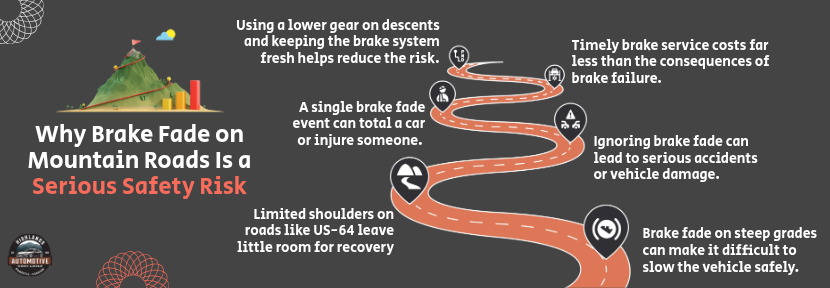
Brake fade on a grade is not a minor annoyance — it is how mountain accidents happen. When the pedal fades and you cannot slow, there is no shoulder to spare on much of US-64. A brake fluid flush is around $120 to $180. A full pad-and-rotor job is a few hundred. Simple math.
Ignore the warning signs and a single fade event can total a car or hurt someone, all to save a service you could have booked in an afternoon. The fix is cheap, and the stakes are not. Use a lower gear on descents, and keep the system fresh.
The Brake Service That Holds Up in the Highlands Hills
We service the whole brake system, not just the part that squeals. We measure pad thickness and rotor runout, inspect the calipers and hoses, and test the brake fluid for moisture and boiling point, then flush it and refill with the correct spec if the fluid has gone old and waterlogged.
Worn pads and warped rotors get replaced with parts rated for the heat these grades throw off. Most brake jobs are same-day. You get a pedal you can lean on all the way down the gorge.
Why Highlands Drivers and Visitors Trust Us
We are a family-owned NAPA AutoCare shop on Cashiers Road, and mountain brakes are daily work here. We service everything — European, import, domestic, and Tesla — for locals in Highlands and Cashiers and for visitors up for the summer, and our techs hand you a detailed estimate before any work starts.
Night drops make it easy to leave the car. Honest and thorough. That is the reputation we have built since 2009. Come see why the reviews say what they say.
Frequently Asked Questions
Q: What causes brake fade on mountain roads?
A: Heat. Riding the brakes down a long grade like the Cullasaja Gorge builds caliper and fluid temperatures until the pads glaze and the fluid boils. Boiling fluid puts compressible air in the lines, so the pedal goes soft. Old, moisture-laden fluid fades first, which is why regular flushes matter here.
Q: How do I keep my brakes from overheating going downhill?
A: Downshift and let the engine hold your speed instead of riding the brake pedal the whole way. Use short, firm brake applications rather than constant pressure. And keep the system healthy — fresh fluid, good pads, and true rotors handle mountain heat far better than worn ones.
Q: How often should brake fluid be changed?
A: Most manufacturers call for a brake fluid flush every two to three years because the fluid absorbs water over time and loses its boiling point. If you live above the gorge and drive these grades often, do not stretch it. Have the fluid tested and flushed on schedule.
Q: Why does my brake pedal feel soft after a long descent?
A: A soft or sinking pedal after a downhill run is a hallmark of brake fade — overheated pads and boiling fluid. Let the brakes cool and have the system checked. If the fluid is old or the pads are worn, a flush and fresh pads usually restore a firm pedal.
Get Your Brakes Mountain-Ready in Highlands
Brakes feeling soft on the gorge? Get them checked before your next trip down the mountain.
Highlands Automotive Service and Repair — 2851 Cashiers Rd, Highlands, NC 28741
Hours: Monday–Friday, 8:00 AM – 6:00 PM (night drops available)
Website: highlandsautomotive.com